Tampilkan postingan dengan label foreign exchange. Tampilkan semua postingan

Minggu, 18 Maret 2012

Japan February Tourism Numbers

Above, autumn colors adorn a shopping mall in Atami. Photo by Armand Vaquer.

Japan's tourist numbers are in for February. There was a dip in the number of foreign tourists to Japan.

According to The Mainichi Daily News:

The number of foreign visitors to Japan in February totaled an estimated 548,200, down 19.3 percent from a year earlier, largely because the Lunar New Year holidays fell in January this year instead of February, the government's tourism promotion agency said Friday.

The Japan National Tourism Organization also attributed the drop in arrivals, down for the 12th straight month and at a much sharper rate than January's 4.1 percent, to travelers' concerns about radioactive contamination from the crippled Fukushima Daiichi nuclear plant, as well as the strong yen.

Given the recent weakening of the Japanese currency, agency officials expressed hope for a recovery in March and beyond when the cherry blossom season begins.


Japan wasn't the only country to see a decline in foreign tourism, according to the article.

However, Japan's decline (with January and February's figures combined) wasn't as bad as the year earlier. It was roughly 11.5%.

To read the full article, go here.

Senin, 12 Maret 2012

Dollar Is Inching Up vs. Yen


The dollar is performing a bit better against the yen.

According to Jiji Press:

Tokyo, March 12 (Jiji Press)--The dollar traded on a firm note above 82 yen in Tokyo Monday, but its topside was heavy due to position adjustment selling and a wait-and-see mood ahead of monetary policy decisions by the Japanese and U.S. central banks.

At 5 p.m., the dollar stood at 82.22-23 yen, up from 81.63-63 yen at the same time Friday.


While this is a small step in the right direction, the time for celebration is when the dollar hits 90-100 yen.

Jumat, 09 Maret 2012

Japan Tourism Recovering A Year After Disaster

Above, Asakusa's five-storied pagoda. Photo by Armand Vaquer.

With the first anniversary of the Great East Japan Earthquake coming this Sunday, articles on Japan tourism have been ratcheted up.

One such article comes from the Salt Lake Tribune. They start the article with:

NEW YORK • A year after a tsunami and earthquake devastated parts of Japan, officials say tourism to Tokyo and other areas unaffected by the disaster is on track to recover to pre-tsunami levels, with business travel leading the way.

In a conference call Thursday night, Shuichi Kameyama, director of the International Tourism Promotion Division at Japan Tourism Agency, said the number of visitors to Japan in 2011 was 6.2 million, down nearly 30 percent from the 8.6 million who visited in 2010.


Then the article moves into more optimistic territory:

But arrivals have been picking up, with a surge in January due to Lunar New Year, and more tourists expected this spring for cherry blossom season and later in the year for summer festivals.

Kameyama said foreign visitor arrivals in January 2012 were only 4 percent below January 2011, before the March 11 disaster.


The article is one of the few I've seen over the months to recognize that a part of the tourism problem lies with the exchange rate between the dollar and yen. This has been a topic I've been hitting on for the past couple of years.

They note:

While bargains and promotions have helped lure some travelers back, others have been discouraged by the strong yen, which makes travel for foreigners expensive.


To read the full article, go here.

Kamis, 08 Maret 2012

Japan Tourism: Full Recovery Predicted For 2012

Above, the Mitsukoshi department store at Ginza Crossing. Photo by Armand Vaquer.

Japan tourism is recovering to normal levels according to a report.

But first, an observation.

The exchange rate between the U.S. dollar and Japanese yen is slightly more favorable to Americans. The current rate of exchange is at 1 USD = 81.5161 JPY (Source: Universal Currency Converter). While this is better than the low-to-mid 70s of weeks ago, the exchange rate needs to get around 100 yen/dollar rate to boost American travelers to Japan.

The Los Angeles Times reported:

Only days before the one-year anniversary of the devastating earthquake and tsunami in Japan, a report by a global travel trade group predicted that Japan's tourism industry will make a full recovery in 2012.

The World Travel and Tourism Council issued a report Wednesday, predicting that international tourism will generate $129 billion in spending in Japan in 2012, compared to $128.5 billion generated in 2010.


The article is in error concerning the plan to give away free airfare to 10,000 foreign travelers. The way the article was written indicated that the plan was implemented, when it actually was scrapped before it even got off the ground.

Still, it is good to see an optimistic report. The one-year anniversary of the earthquake and tsunami is this coming Sunday.

To read the full article, go here.

Sabtu, 25 Februari 2012

Dollar Rises Above 80 Yen, Finally


Things are looking more promising as the U.S. dollar broke the 80 yen threshold for the first time since July this past week.

Jiji Press reported:

At 5 p.m. [Friday], the dollar stood at 80.56-57 yen, a level unseen since mid-July 2011, compared with 80.11-12 yen at the same time Thursday.


While this is still a far cry from the 2007 rate of exchange I received (116 yen per dollar), at least the rate is headed in the right direction. A more favorable exchange rate will make travel to Japan more attractive to U.S. tourists.

To read the full story go here.

Sabtu, 18 Februari 2012

Dollar May Retake 80 Yen Soon

Above, Harajuku Station in Tokyo. Photo by Armand Vaquer.

Jiji Press is reporting that the U.S. dollar may rise to 80 yen soon.

In an article posted today:

Tokyo, Feb. 18 (Jiji Press)--Following a sharp rally in the last two weeks, the dollar may soon rise above the 80 yen threshold for the first time since last August.

The greenback has been weakening versus the yen since mid-2011 on the back of sovereign debt problems in Europe and the United States, with the Japanese unit sought as a safe-haven currency.


If so, this would make travel to Japan and Japanese imports more affordable to Americans.

To read the full story, go here.

Rise In

Selasa, 14 Februari 2012

Bank of Japan Weakens Yen


The Bank of Japan took action today that slightly improved the U.S. dollar's exchange rate against the yen.

From Japan Today:

TOKYO — The yen weakened against major currencies in Asian trade on Tuesday afternoon following the Bank of Japan’s surprise decision to further ease monetary policy.

The unit softened to 102.55 against the euro, compared with 102.34 late Monday in New York, while it also weakened to 77.91 against the dollar, from 77.58.

The central bank on Tuesday increased its asset purchase program by 10 trillion yen ($130 billion) to about 65 trillion yen, as it looks to put an end to the deflation that has wracked the economy for years.

Additional easing by a central bank increases the supply of money in the economy, weakening the currency.


Weakening the yen further would make Japan more attractive to would-be tourists. They would gain more purchasing power as they'd be able to buy more yen.

To read the full story, go here.

Rabu, 08 Februari 2012

Japan Still Trying To Make Tourism Attractive

Above, Tokyo Tower looms in the background. Photo by Armand Vaquer.

It is interesting to read articles on recovery efforts of Japan's tourism industry. Most of them focus on the fears of would-be tourists of radiation contamination from the Daiichi nuclear power plant in Fukushima.

I read another one today. This is from Channel NewsAsia.com:

JAPAN: Almost a year after the March 11 disasters struck Japan and hit its tourism sector, authorities are still finding ways to draw tourists back.

Koreans and Singaporeans have consistently ranked among the top 10 inbound tourists to Japan before the March 11 disasters, when a 9.0-magnitude earthquake triggered a tsunami, which knocked out the cooling systems of the Fukushima plant's reactors.

Almost a year after the disasters hit, fears of a nuclear meltdown at the Fukushima Daiichi nuclear plant still linger in the minds of would-be tourists, making travel to Japan a less attractive option.

That's a concern tourism authorities are trying to tackle.


While concerns over the Fukushima nuclear plant are justified to an extent, most such articles gloss over (or don't even mention) the poor rate of exchange between the Japanese yen and the U.S. dollar (and other currencies). The article is another that avoids mentioning the foreign exchange situation. Foreign tourists will avoid places where they will receive a poor rate of exchange. To them, it would make a trip to Japan more expensive and less attractive.

Today's U.S. dollar/Japanese yen rate is 1 USD = 77.0337 JPY.* As I've mentioned in past blog posts, I received 116 yen per dollar exchanged in 2007. In December 2010 (my most recent trip to Japan), that deteriorated to around 86 yen per dollar exchanged.

If Japan can get the exchange rates more favorable to potential tourists, that would go a long way to solving their tourism woes. That is another concern that should be tackled.

To read the full article, go here.


*Source: Universal Currency Converter.

Rabu, 18 Januari 2012

Japan Tourism: CNN Gets It Right

Above, dusk in Tokyo. Photo by Armand Vaquer.

Finally, a news organization got it right.

CNN.com reported on the state of Japan tourism:

Hong Kong (CNN) – More than 10 months after the Fukushima meltdown and Japan is still dealing with the fallout - this time the key industry of tourism is reeling from the catastrophe.

According to government figures released Tuesday, the number of foreign nationals entering Japan dropped 24.4% from a record of 9.45 million in 2010 to 7.14 million in 2011.

New entries of foreign nationals - a figure that excludes working or studying expatriates that may have returned after home leave - made a similarly dismal showing. The Immigration Bureau of the Justice Ministry said new entrants fell from 7.92 million in 2010 to 5.45 million in 2010, slumping 31.2%.

The government says a combination of the March 11 earthquake and tsunami and the high level of the Japanese yen were the key factors in the decline.


There's been many articles on the state of Japanese tourism, but their only focus has been on the earthquake, tsunami and radiation problems. They fail to take into account the poor rate of exchange between the U.S. dollar and the Japanese yen.

More Americans would seriously consider a vacation in Japan if the dollar could buy more yen.

A kudos to CNN for getting it right!

To see the full article, go here.

Selasa, 27 Desember 2011

Japan Tourism: Fix The Yen

Above, Ginza Crossing in Tokyo. Photo by Armand Vaquer.

The news of Japan's cancelling of the 10000 free flights plan was a disappointment to many. But it really wasn't that big of a surprise. There's an old saying, "If it sounds too good to be true, it usually is."

If Japan is really serious about boosting tourism, something has to be done about the rise of the yen versus other currencies. This is causing a chilling effect on tourism to Japan.

The San Francisco Chronicle wrote today:

The Japanese currency traded at 77.86 per dollar and 101.78 versus the euro as of 11:38 a.m. New York time. For the year, the yen advanced 4.2 percent against the greenback and 6.7 percent against the 17-nation currency.


This is causing travel to Japan to be more expensive as travelers' currencies aren't buying as much yen (in exchange) than they previously did. In 2007, I got 116 yen per dollar exchanged.

Besides causing tourism to slump, the over-valued yen is hurting Japanese businesses who rely on exporting goods overseas. Toyota and other exporters are talking about big lay-offs due to the over-valued yen as it makes their products more expensive.

Things won't change until the Japanese government gets the yen under control. If people can get a better rate of exchange, they will come.

Read more: http://www.sfgate.com/cgi-bin/article.cgi?f=/g/a/2011/12/27/bloomberg_articlesLWVFQ10YHQ0X.DTL#ixzz1hnmkxxOa

Selasa, 20 Desember 2011

Travel Weekly's 2011 Year In Review

Above, a streetcar approaches a stop in Nagasaki. Photo by Armand Vaquer.

Travel Weekly.com has posted their "2011: Year In Review" on the state of the travel industry worldwide.

On Japan, they posted:

Nuclear radiation may be even scarier than violence, and that was the grim aftermath of the earthquake and tsunami that crippled Japan's Fukushima nuclear plant, leading to the world's worst nuclear disaster since the 1986 Chernobyl accident in Ukraine. Japan has addressed the damage from the quake and tsunami, but the area around the damaged reactors remains cordoned off for 12 miles in all directions, a necessary precaution that casts a pall over the entire country. In the immediate aftermath of the disaster, arrivals from the U.S. fell by more than half. The numbers are beginning to come back, as consumers come to realize that Japan's major attractions are unaffected, but for Japan's tourism economy, it can't happen fast enough.


I couldn't agree more with the last sentence. It is unfortunate that the initial hysterical reporting of the Fukushima nuclear power plant's problems exacerbated the drop in tourist numbers. Again, I would have to point out that the poor rate of exchange between the U.S. dollar and the Japanese yen also put a damper on American travelers' desire to visit Japan. Those numbers will pick up once the dollar/yen exchange rate is more favorable to U.S. tourists. The current rate of exchange is mired at around 77-78 yen per dollar exchanged.


Along with Japan's major attractions, kaiju locations and landmarks were also unaffected, such as the Sasebo Catholic Church at left. The church can be seen in the 1956 feature Rodan.

As far as I am concerned, at least I can say that my year in sales of The Monster Movie Fan's Guide To Japan has been steady. Thanks to the guide, the months of slow and low claims work were more bearable. It pays to have more than one oar in the water!

To view the full Travel Weekly post, go here.

Minggu, 18 Desember 2011

Japan Tourism Industry Optimistic For 2012


Japan's tourist industry is optimistic that 2012 will see a major rebound in tourist numbers.

According to The Star.com:

TOKYO—The Japanese capital is all dressed up for the holidays and people are bundling up to head out and enjoy the sights. Many flock to the brick-lined Yebisu Garden Place to see its solar-powered Christmas tree, hear live music, and marvel at the Baccarat Eternal Lights chandelier. Five-metres tall, three-metres wide, and adorned more than 8,400 crystal parts and 250 lights, it’s a mesmerizing display, symbolic perhaps of the hopes people here have for the future. After the pall that fell over this country following the March 11th disaster, most are looking forward to a brighter 2012.

That includes the folks who work in tourism. The Japan National Tourism Organization (JNTO) says foreign visits dropped 73% in the days after the earthquake, tsunami, and nuclear accident. But with time, and thanks to a Herculean effort to salvage a $19.4 billion (CAD) industry, travelers are returning. As of October, visits were only down about 15% overall.


There is one downside that the article omits: the poor rate of exchange between the dollar and yen. The number of American tourists to Japan will rise once the rate of exchange improves.

The article then goes through a list of Japan's regions people should visit.

To view the full article, go here.

Selasa, 08 November 2011

Ex-BOJ Board Member Predicts Japanese Economy Collapse Unless Yen Weakens


It has been a while since I last took a deep look into the moribund exchange rate between the U.S. dollar and the Japanese yen. Things don't look good.

According to Bloomberg.com:

The yen surged to a postwar record of 75.35 per dollar on Oct. 31, spurring the government to intervene in markets for the third time this year. The currency, which traded at 78.03 as of 9:14 a.m. in Tokyo, hasn’t been at 100 since April 2009.


It appears that the latest intervention by the Japanese government did very little to stop the further sinking of the dollar against the yen. It is disheartening to see that the dollar hasn't exchanged for 100 yen since 2009. For my April 2007 trip to Japan, I was able to get 116 yen per dollar exchanged. Last year, the dollar/yen exchange was in the 80s. I got around 85 yen per dollar exchanged.

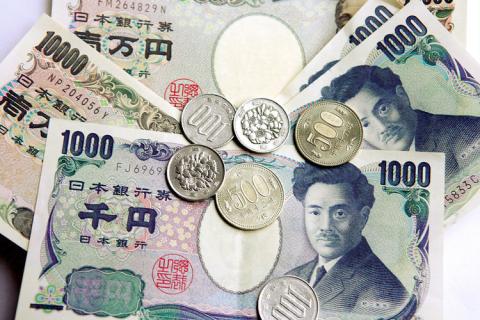
It used to be the axiom about Japan travel that travelers should spend all money exchanged to get full value. Now, it is the opposite. Travelers to Japan should save as much as they can to get more dollars for every yen exchanged. Last year, I got $115 per every ¥10,000 exchanged at Narita Airport.

All this doesn't help the Japanese tourism industry, merchants or Japanese exporters (Toyota, for example). This leads to exporters' overseas profits to drop, causing major concern amongst Japanese economists. If tourists (who do come to Japan) don't spend their money on goods and services, Japanese businesses will be headed to bankruptcy.

A former Bank of Japan board member said:

“The Japanese economy will collapse unless the yen weakens to 100 per dollar,” Nobuyuki Nakahara, who served as a policy board member between 1998 and 2002 under then BOJ Governor Masaru Hayami, said in a Nov. 4 interview in Tokyo. “It’s never too early to hammer out further stimulus.”


While the Japanese tourism industry is showing signs of recovery since the Great East Japan Earthquake of March 11, the problems of the too-strong yen vs. foreign currencies will further hamper recovery efforts in the months ahead.

To read the full Bloomberg article, go here.

Jumat, 21 Oktober 2011

Dollar Sinks To New Low Against Yen


The U.S. dollar hit a new low against the Japanese yen today.

According to Reuters:

NEW YORK, Oct 21 (Reuters) - The U.S. dollar slumped to a record low against the yen on Friday in its biggest one-day decline in nearly two months, bringing back into focus the threat of official intervention to weaken the Japanese currency.

Traders reported initial large selling of dollars from a U.K. clearer and macro funds, and losses accelerated after the pair broke through a series of stops around 76.30 and 75.90.

The dollar fell as low as 75.78 yen on trading platform EBS , surpassing its previous record low of 75.941 set in August.


For the full story, go here.

Selasa, 18 Oktober 2011

Japan's 10,000 Free Airfare Plan, More Details

Above, the garden at Nijo Castle in Kyoto. Photo by Armand Vaquer.

News of the proposed 10,000 free airfares plan to foreigners by the Japan Tourism Agency hit the news by storm.

Gaijinpot.com has posted more details:

TOKYO — Japan will offer 10,000 foreigners free airfares to visit the country next year, in an attempt to boost the tourism industry which has been hit by the ongoing nuclear disaster, a report said Monday.

The Japan Tourism Agency plans to ask would-be travelers to submit online applications for the free flights, detailing which areas of the country they would like to visit, the Yomiuri Shimbun newspaper said.

The agency will select the successful entrants and ask them to write a report about their trip which will be published on the Internet.

Tourism authorities hope that positive reports from travelers about their experiences in Japan will help ease international worries about visiting the country, the newspaper said.


Above, Tokyo Tower. Photo by Armand Vaquer.

While the public relations behind this plan is a good one, it still doesn't fix the chronic problem (of the past three years) of the poor rate of exchange between the U.S. dollar and Japanese yen. The exchange rate is currently hovering around the 76-77 yen per dollar exchanged. Unless the amount of yen obtainable by the dollar improves, travel to Japan by Americans will remain down.

The only silver lining in this is that if Japan travelers don't spend all of their money in Japan, they actually can buy more dollars when they exchange their yen before heading home. I was able to obtain $115 for every ¥10,000 I exchanged last year at Narita Airport. Right now, a tourist can buy more dollars than I did in Japan. This is something to consider.


If a tourist plans wisely (including finding hotel and airfare bargains), and manages to not spend all of their vacation money, they can actually still have a great Japan vacation and make money.

The Japan Tourism Agency's airfare plan is one kaiju fans should try to jump on board.

To see Gajinpot.com's full article, go here.


Left, Ginza, Tokyo. Photo by Armand Vaquer.

Kamis, 13 Oktober 2011

A Word of Thanks!

Right, Yuu Asakura with "The Monster Movie Fan's Guide To Japan." Photo by Armand Vaquer.

The 20% autumn discount sale of The Monster Movie Fan's Guide To Japan was a big success! Thanks to the press release service I started using a few months ago, more people on the Internet were reached than ever before.

This shows that people still are interested in traveling to Japan, especially those who are fans of Japanese science-fiction and fantasy movies. This is despite the current problems of the poor exchange rate between the U.S. dollar and the Japanese yen (hovering around 76-77 yen/dollar exchanged). Hopefully, once there's a new president is elected next year and a changeover in control of the U.S. Senate, the exchange rate will improve and more people will find a trip to Japan more appealing.

Minggu, 18 September 2011

Post Quake, Japan Struggles For Normalcy

Above, the Saikai Bridge in Kyushu that was featured in "Rodan." Photo by Armand Vaquer.

An interesting article on the state of Japan's tourism industry caught my attention.

The article is titled, "Post Quake, Japan Struggles For Normalcy."

Here is an excerpt:

Tourism has dwindled in Japan, where under normal circumstances, hotels could name their fees and anything amounting to a serious discount is generally unheard of.

Now, hotels and tour groups in Tokyo are offering major discounts in the hopes that a good deal will make potential visitors forget about things like earthquakes and leaky nuclear plants. The industry is simultaneously facing the double challenge of trying to offset the Yen's rise against the US dollar.

"Even top-class hotels have reduced their prices," said Yonehara Ryozo, president of the Institute for Japanese Cultural Exchange and Experience, who is among those tasked with getting things back on track.

Indeed, a four-star hotel room in the city's glittering Ginza district can now be had for between $120 - $150 a night, including all taxes. Not convinced? How about free breakfast and a room upgrade? No?


As regular Rancho readers know, I've been promoting The Monster Movie Fan's Guide To Japan for those interested in making an autumn visit. To sweeten interest, I'm even offering the guide at a 20% discount starting on the Autumnal Equinox on September 23.

Also, as regular readers know, I've also been monitoring the exchange rate between the U.S. dollar and the Japanese yen. The dollar has taken a big hit in recent months with the current exchange rate at 1 USD = 76.7700 JPY (Source: Universal Currency Converter).

However, if deals can be had as the article states, they will take the sting away from the poor exchange rate. It is definitely something to look into if you are contemplating an autumn visit to Japan.

Besides the deals that can be found, travelers will enjoy the moderate temperatures an autumn visit will provide.

By the way, where did the article come from? Al Jazeera.

To see the full article, go here.